ServicesRoof Inspections
Roof Inspections in Midwest City
We walk your roof, check the attic and photograph what we see, then explain it plainly before suggesting anything. You get a clear picture of the roof's condition, what needs attention now and what can safely wait.
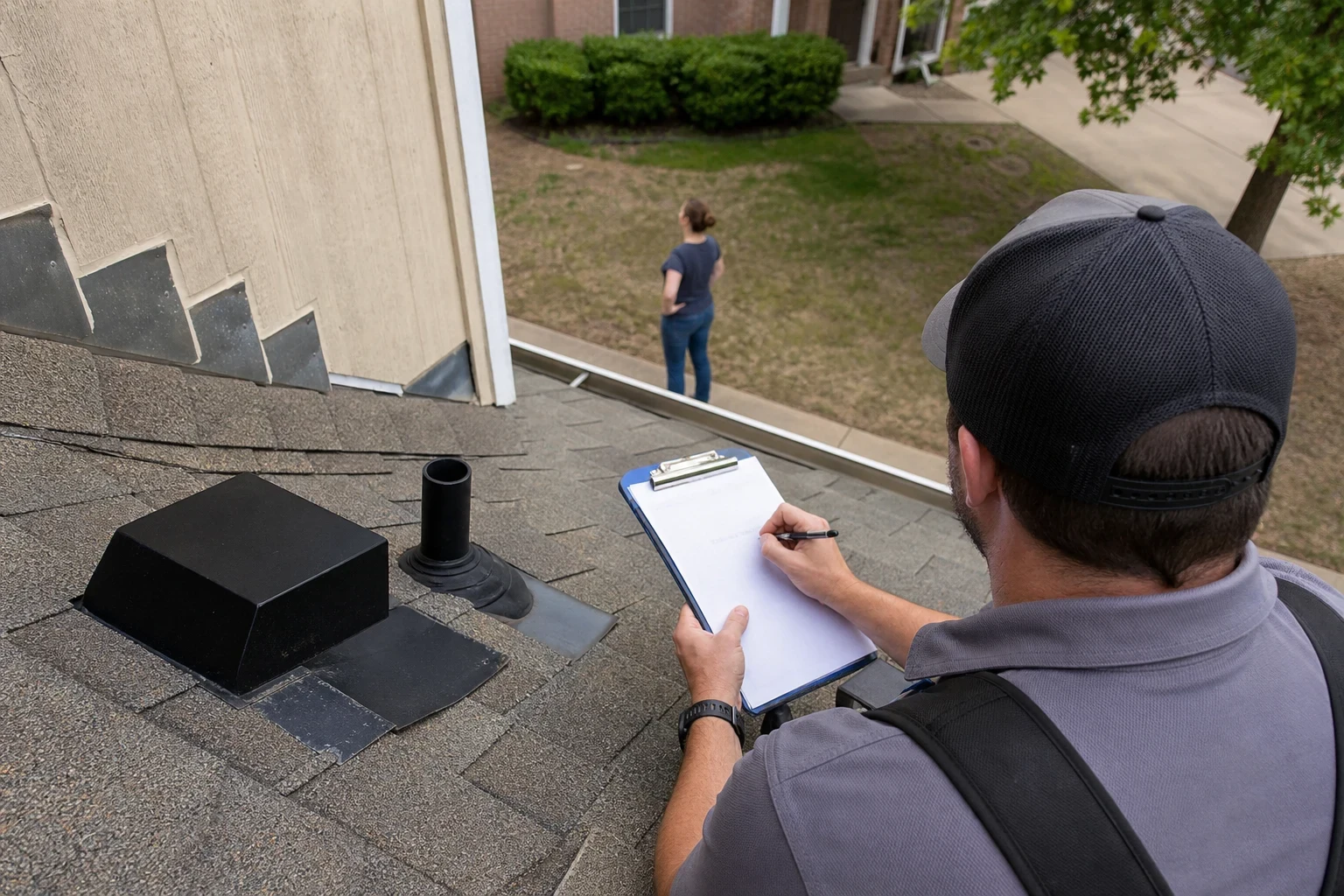
What a close look at your roof tells you
Every roof has several layers working together to keep water out of your home: shingles on top, metal flashing where the roof meets walls and chimneys, vents and pipe boots, the decking beneath, and the attic under all of it. Leaks usually start at one small detail months before a ceiling stain gives them away.
Our order of work is simple. We look first and recommend second. If the roof only needs a few resealed nail heads and a new pipe boot, that is what we will tell you. If it is near the end of its life, you will see the photos that show why, and you can weigh roof repair against roof replacement with the evidence in front of you.
This visit makes sense after hail or high wind, before buying or selling a house, when an older roof is nearing its expected life, or when something simply looks off and you want a straight answer.
What we check on every roof
Shingle surface and granules
We look for bruised or cracked shingles, lifted tabs and bare patches where the granules have worn off. Those granules shield the asphalt from sun, and once they go, curling and cracking speed up.
Flashing and penetrations
Chimneys, sidewalls, skylights and vent stacks are where most leaks start. We check that the metal flashing is tight and sealed, and that rubber pipe boots have not split from years of summer heat.
Decking and soft spots
Walking the roof tells us whether the plywood underneath has give to it. Soft spots, sagging lines and rot along the eaves point to moisture that has been getting in for a while.
Attic and ventilation
From inside, we look for daylight, damp insulation, darkened sheathing and rusted nail tips. We also check the balance of soffit and ridge vents, because a hot, poorly vented attic bakes shingles from below.
Gutters and drip edge
Overflowing or sagging gutters push water into fascia and decking. We note what we see and whether any of it calls for work on your gutters.
Written report with photos
You receive dated photos and notes sorted into what needs attention soon and what is worth watching. The record is useful later for budgeting, a home sale or an insurance conversation.
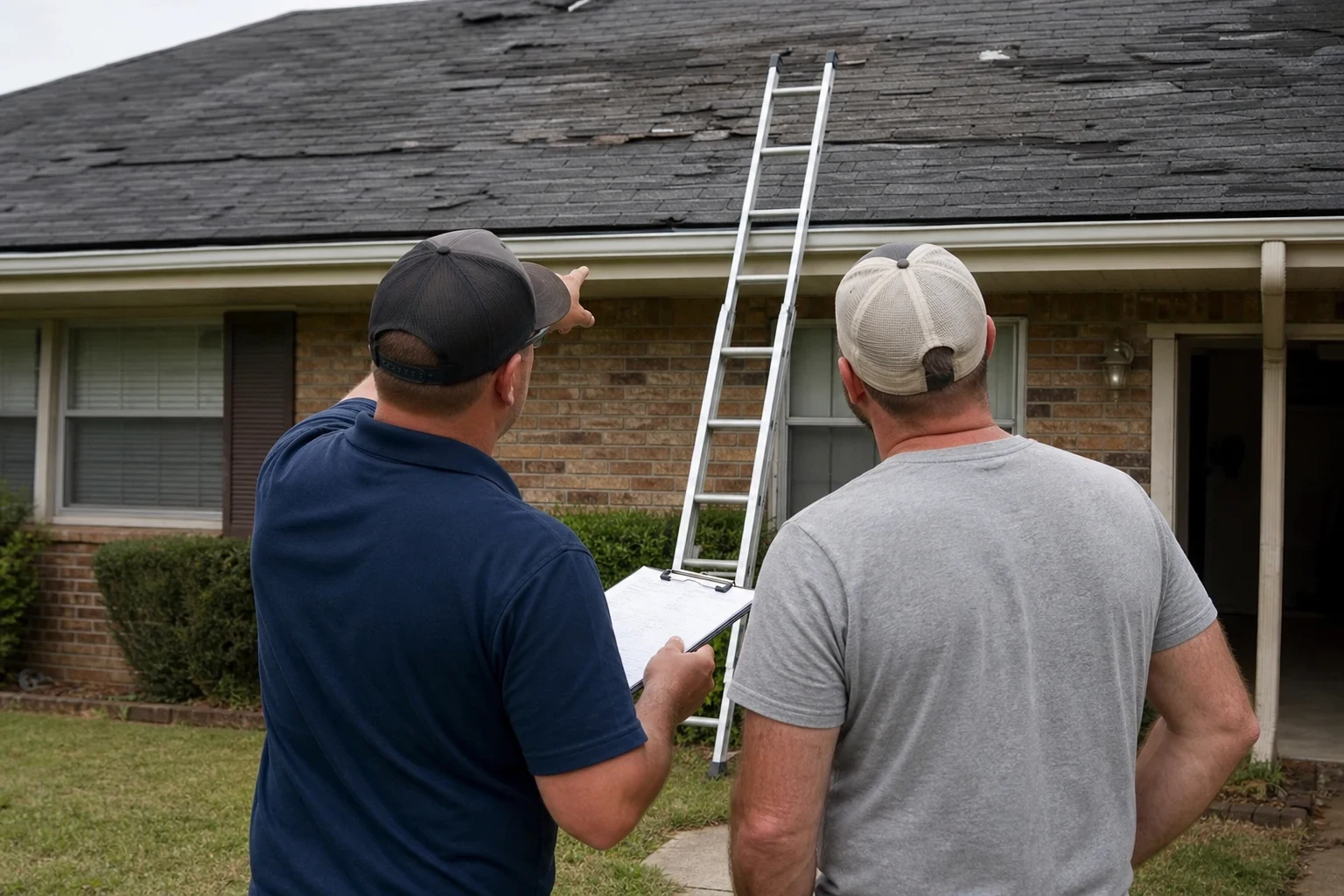
Signs it is time for a roof inspection
- Granules collecting in the gutters
- A handful of grit at the downspouts after rain is normal on a new roof. Steady amounts on an older one usually mean the shingles are wearing thin.
- A recent hail or wind storm
- Spring storms in central Oklahoma can bruise shingles without leaving obvious holes. Dents on gutters, vents or a car in the driveway are a good hint the roof took hits too.
- Stains, odors or damp insulation
- A brown ring on a ceiling or a musty smell in the attic means water is getting somewhere it should not. Finding the source early keeps the repair small.
- Missing, lifted or creased shingles
- Shingles that have lifted in wind may have lost their seal even if they settled back down. Those are the ones that fail in the next storm.
- An aging roof or a home purchase
- If your roof is fifteen or more years old, or you are buying a house, a close look tells you how much useful life is left before it becomes a surprise.
How the visit works
- 1
A short phone conversation
You tell us about the roof's age, any leaks and what prompted the call. We set a time that suits you and let you know what the visit will involve.
- 2
Walking the roof
We set ladders carefully and walk the roof where the pitch and shingle condition allow. On steep or brittle roofs we limit foot traffic and work from the edges, so the visit does not cause damage of its own.
- 3
The attic check
If someone can let us in, we head up through the hatch with a flashlight and study the bare wood of the sheathing from below, along with the insulation and the vents. Problems we suspected from the roof surface are often confirmed here.
- 4
Plain answers, then options
We go through the photos with you and explain each item in ordinary language. Recommendations come after that, ranked by urgency, and the decision stays yours.
What affects the cost of a roof checkup
The price depends on the roof itself and on what the report will be used for. We go over those details with you on the phone before setting a date, so the cost is clear before the visit begins.
- Footprint and steepness
- A larger roof takes longer to walk and photograph section by section. Steeper slopes call for slower, more deliberate footing and sometimes roof jacks or a safety harness.
- Chimneys, valleys and dormers
- Each chimney, skylight, valley and dormer brings its own flashing to examine up close, and a roof with many of them simply takes more time.
- Getting into the attic
- An open hatch with room to stand makes the inside check quick. Low crawl spaces or deep blown-in insulation mean careful, slower movement between the joists.
- What the report is for
- A routine checkup needs lighter notes than a report for a home sale or a storm claim, where more photos and fuller written detail are worth having.
Roof inspection questions
- How long does the visit take?
- Most single-family roofs take around an hour, sometimes longer with a steep pitch, several chimneys or a difficult attic. We would rather take the time than miss a detail. We go over what we saw with you before we leave.
- Do I need to be home?
- Not for the exterior work. The attic check does need someone to let us in, and many homeowners like to be there to see the photos as we walk through them. We can plan around whatever works for you.
- Will you try to sell me a new roof?
- No. We show you what we found and explain what it means. Many visits end with a small repair or simply a note to check again in a year, and we say so when that is the honest answer.
- Can a roof report help with an insurance claim?
- Dated photos and clear notes give you a solid record of the roof's condition after a storm. We can explain how a claim generally moves from first call to adjuster visit, but coverage is decided by your insurance company and its adjuster, not by us. If damage is confirmed, our storm damage repair work picks up from there.
- How often should my roof be checked?
- Every year or two is sensible for most homes, and again after any significant hail or wind. Roofs past their midpoint benefit from a yearly look, since small failures add up faster as shingles age.
Find out where your roof stands
A careful look gives you facts before you spend anything on repairs. Share the roof's age and what you have noticed, and we will pick a day that fits your schedule.