ServicesCommercial Roof Repair
Commercial Roof Repair in Midwest City
We trace leaks on flat and low-slope commercial roofs to their actual source, show you what we found, and repair the membrane, seams and flashings that failed. You get a clear scope before work starts and a roof that keeps your building dry.
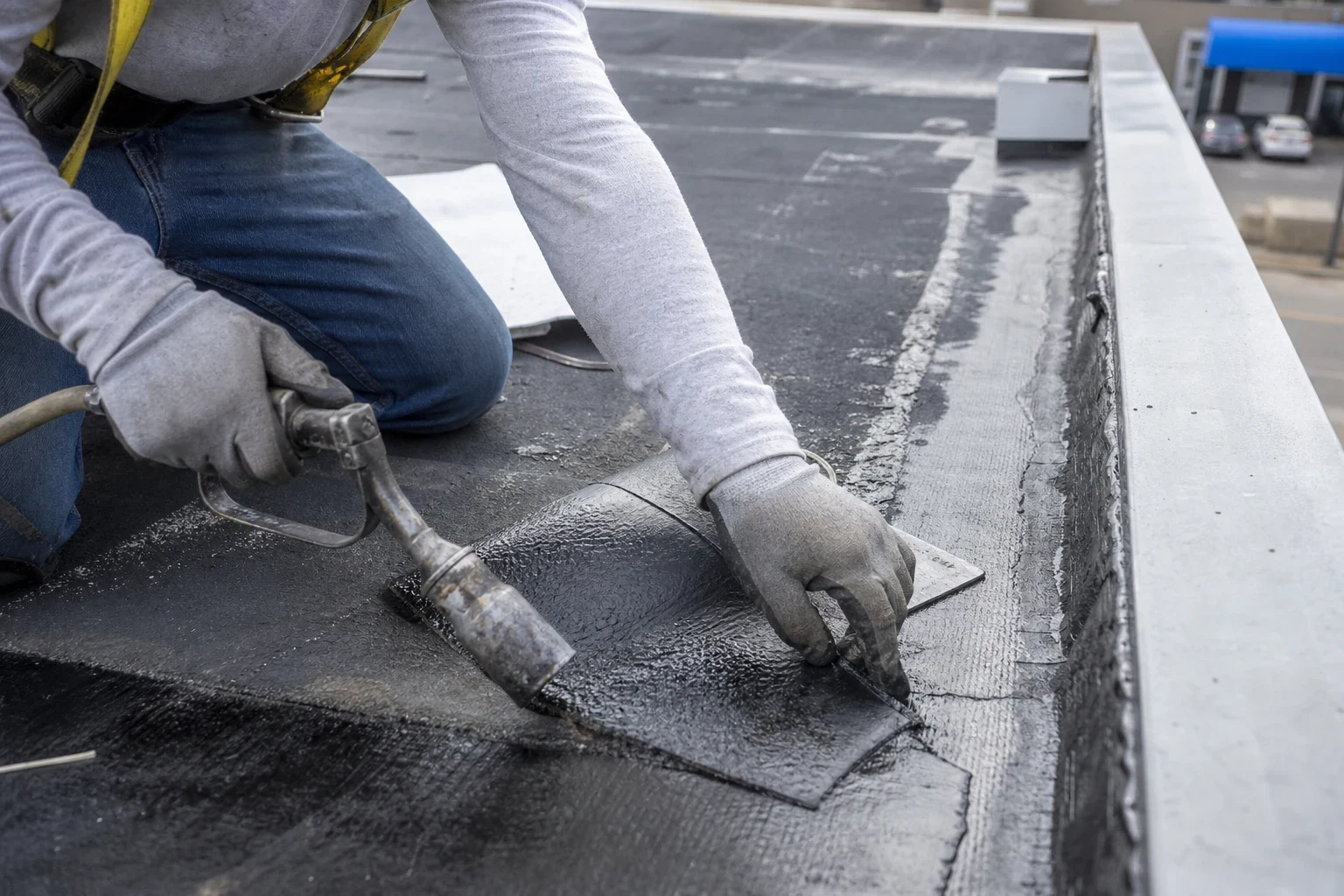
Repairs that start on the roof, not on a price sheet
Water on a commercial roof rarely comes in where the ceiling stain shows. It runs under the membrane, along a deck flute or across insulation boards before it finds a gap. So we walk the whole roof first, check the seams, drains, curbs and parapet walls, and mark every spot that needs attention.
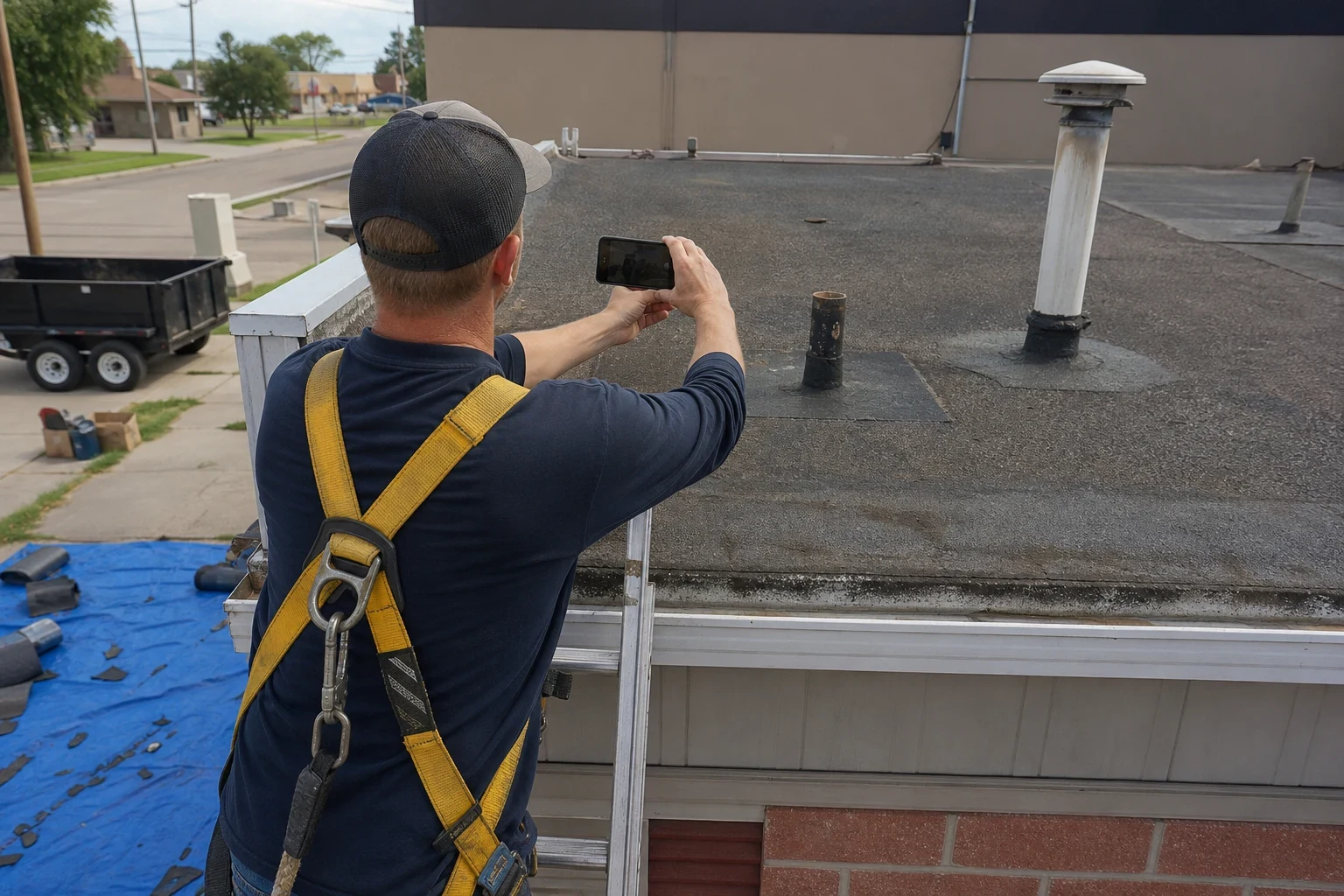
Then we tell you plainly what we saw. Many roofs have years left in them and only need targeted work: a reseamed lap, a new boot around a pipe, rebuilt flashing at a rooftop unit. When a section is too wet or too worn to hold a repair, we say so and explain why, with photos.
We work on TPO, EPDM, PVC, modified bitumen, built-up gravel roofs and exposed-fastener metal panels. If the findings point toward a new system, our Commercial Roof Replacement page covers that path.
What a commercial repair includes
- Full-roof survey
- We inspect the entire surface, not just the area above the leak. Problems tend to cluster, and finding the second weak seam now saves another call later.
- Seam and membrane repair
- Open laps on TPO and PVC are cleaned and heat-welded. EPDM seams get primer and seam tape, and punctures are patched with matching membrane rather than caulk.
- Flashing at curbs and walls
- Rooftop units, skylights, vents and parapets are where most commercial leaks begin. We rebuild flashing that has pulled loose, cracked or shrunk away from the wall.
- Drains, scuppers and ponding
- We clear and reseal drains and scuppers, and we look at why water is standing. Low spots that hold water for days speed up membrane wear and usually need attention.
- Metal roof fastener work
- On metal buildings, we replace backed-out or worn screws with new gasketed fasteners and seal leaking end laps and ridge closures.
- Wet insulation replacement
- Where readings show soaked insulation, we cut out that area, replace the boards and tie the new membrane back into the existing roof.
Signs your commercial roof needs repair
Ceiling tile stains
Brown rings or sagging tiles mean water is getting through somewhere. The source may be several feet away from the stain.
Water standing two days after rain
Ponding that lingers points to clogged drains, a sagging deck or crushed insulation. It also stresses seams over time.
Blisters, ridges or loose seams
Bubbles in modified bitumen, wrinkles in EPDM or lifted edges on TPO mean the membrane has lost adhesion or let moisture underneath.
Hail bruising or punctures
After a hailstorm, small fractures in the membrane may not leak right away. They tend to open up with the next season of heat and cold.
Rust or loose screws on metal panels
Rust streaks around fasteners and panel laps are an early sign that gaskets have failed.
How a repair visit runs
- 1
Phone conversation
Tell us about the building, the roof type if you know it, and where water is showing up. We set a time to get on the roof.
- 2
Survey and findings
We inspect the roof and the interior leak points, take photos and check suspect areas for trapped moisture. You get a written scope that lists each repair and its location.
- 3
Scheduling around your business
We plan the work around your hours, deliveries and tenants. Roof access, ladder placement and any noisy work are agreed on before the crew arrives.
- 4
Repair and cleanup
The crew completes the scoped repairs, removes debris and old materials from the roof and grounds, and leaves drains clear.
- 5
Walkthrough and photos
We show you the finished work in photos and point out anything to watch over the coming seasons.
What moves the cost of a commercial repair
Every repair is priced from the survey, so the number reflects your roof rather than a guess. The written scope lists each item, which makes it easy to see where the cost comes from and to plan any lower-priority work for later.
- Roof system and its condition
- Welding a TPO seam is a different job from patching an aged built-up roof with gravel to clear. Brittle or heavily weathered membrane takes more preparation.
- Amount of wet insulation
- Saturated boards have to come out. The size of the wet area is often the biggest single factor in a repair.
- Rooftop equipment and penetrations
- Curbs, pipes, conduit and HVAC units each need their own flashing, and some require coordination with your mechanical contractor.
- Access and building height
- Roof hatches, interior-only access or a tall parapet change how materials get up and debris comes down.
Before you schedule a commercial repair
Something not covered here? (405) 357-9639
How do you decide between patching our roof and starting over?
The survey settles it. When the membrane is still sound and moisture is confined to a few spots, targeted repairs are usually the better use of your budget. If wet insulation runs across large areas or the membrane is breaking down everywhere, more patching only delays a bigger bill, and we will say so plainly.
Will we need to close while the crew is working?
Most businesses stay open. The work happens up top, and we plan noisy or disruptive steps around your hours. If we need to look at a leak point from inside, such as above a ceiling grid, we set that up with you in advance.
Will you work on a roof another contractor put on?
Yes. We repair most low-slope and metal systems no matter who installed them. We match the existing membrane so the new material bonds properly with what is already on the roof.
Water started coming in after hail. What can you do about the insurance claim?
We photograph the hail and wind damage and write up exactly what we found and where, so you have a clear record to share with your carrier. We can also explain the usual steps of a claim. Coverage itself is settled between you and your insurer, not by us. If the storm hit hard, the Storm Damage Repair page walks through that work step by step.
What kind of lifespan should we expect from a repair?
A correctly welded seam or rebuilt flashing should hold for as long as the membrane around it. For that reason we report on the condition of the whole roof, not only the area we repaired, so you can plan ahead.
Find out what your roof actually needs
A survey and a plain written scope give you something solid to plan around. We will walk the roof, show you the photos and explain each repair before any work is scheduled.