ServicesCommercial Roof Replacement
Commercial Roof Replacement in Midwest City
We replace flat and low-slope roofs on offices, shops and warehouses after a careful look at what is actually under the membrane. You get plain findings, a written scope and a schedule built around keeping your business open while the crew works overhead.
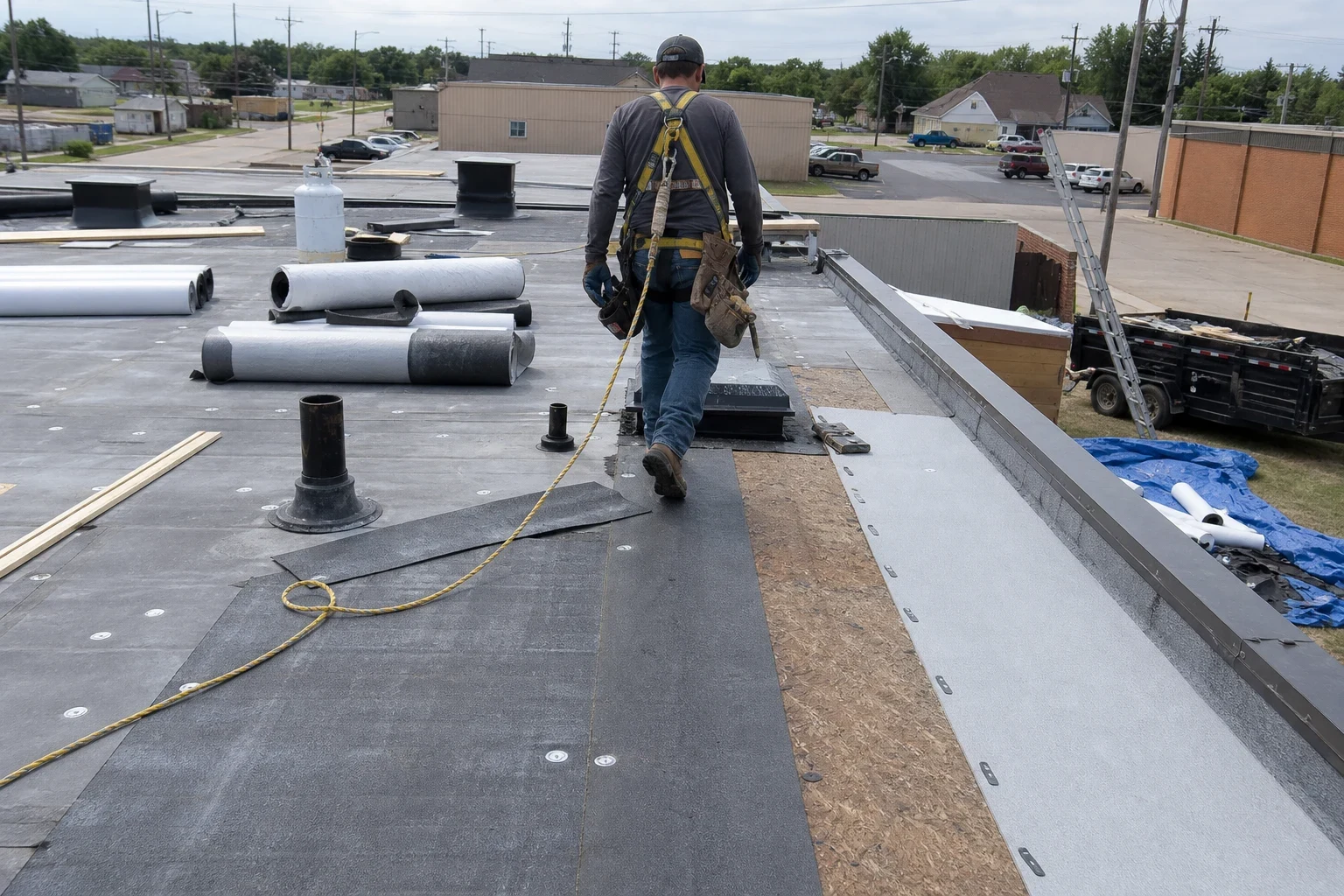
When a commercial roof needs replacing, not patching
A commercial roof usually fails from the inside out. Water slips past a seam or a flashing, soaks into the insulation board and spreads quietly for months before a ceiling tile stains. By then the real question is how much of the system is wet, and that answer decides whether repair, a recover or a full tear-off makes sense.
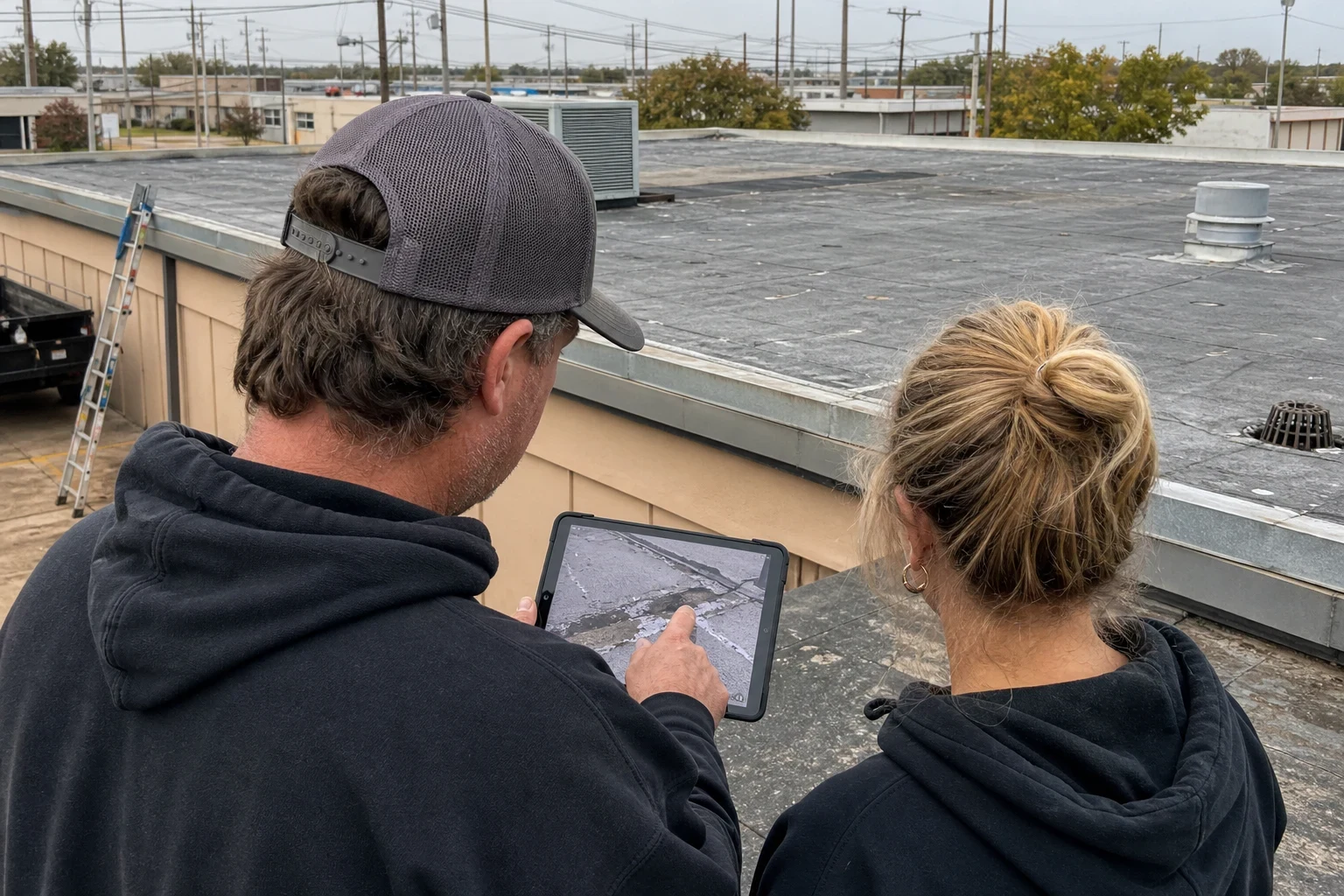
We start every project by finding out. Core cuts and moisture readings show us the condition of the insulation and deck, and we photograph what we see. When targeted work can save the roof, you hear that plainly from us, and the job becomes a commercial roof repair instead. When it cannot, you will understand exactly why before any conversation about materials begins.
Oklahoma summers push rooftop surface temperatures well past what the air feels like, and spring hail and wind test every seam. A replacement planned with the right membrane and proper drainage is what lets the new roof hold up for the long run.
What a replacement covers
- Moisture survey and core samples
- We cut small cores to see each layer, from membrane to deck, and take readings across the field. This tells us how much wet insulation has to come out and whether a recover is even allowed.
- Tear-off and deck repair
- We remove the old system down to the deck where the findings call for it. Rusted metal deck or soft wood sections are replaced before anything new goes down.
- Insulation and tapered drainage
- New polyiso board brings the roof up to current energy code. Where water has been ponding, tapered insulation and crickets steer it toward drains and scuppers.
- Membrane or metal system
- We install TPO, EPDM, modified bitumen or standing seam metal, depending on your building, its use and its budget. We explain how each one behaves in heat, cold and hail so the choice is yours.
- Flashings, curbs and edge metal
- Rooftop unit curbs, pipe penetrations, parapet walls and perimeter edge metal are detailed and flashed new. These are the spots where most commercial leaks begin, so they get the most care.
- Permit, cleanup and final walk
- We pull the building permit and schedule the required inspection. Debris is hauled off daily, and we walk the finished roof with you before we call the job done.
Signs your building may be due for a new roof
Leaks that return after repair
If the same area leaks again a season after it was patched, water is likely traveling through saturated insulation. Patching the surface will not dry what is underneath.
Ponding that lingers for days
Standing water 48 hours after rain points to sagging deck, crushed insulation or poor slope. It also speeds up membrane aging.
Spongy or soft areas underfoot
A roof that gives when you walk it often has wet or broken-down insulation. That loses its R-value and adds weight to the deck.
Splitting seams and shrinking membrane
Older membranes pull away from walls and curbs, and seams open after years of heat cycling. Once that is widespread across the field, repairs stop being economical.
Blistering, cracking or exposed felts
On built-up and modified bitumen roofs, alligatoring and bare felts mean the surfacing has worn through.
How a commercial replacement runs
- 1
Roof assessment and findings
We walk the roof, take cores and moisture readings, and photograph every problem area. You get a written report in plain language, along with our honest view on repair versus replacement.
- 2
Scope, system choice and schedule
We write a line-item scope covering tear-off, deck, insulation, membrane and flashings. Then we plan crew hours, material deliveries and crane or lift access around your tenants, customers and deliveries.
- 3
Section-by-section installation
We remove only as much roof each day as we can close up by evening, so the building stays dry if weather turns. Interior areas below active work are noted ahead of time so you can protect stock or equipment.
- 4
Inspection and closeout
After the city inspection, we do a final walk with you, check every drain and flashing, and hand over photos of the completed work.
What shapes the cost of a commercial roof
Every building prices differently, and the biggest unknown is usually what the old roof is hiding. That is why the moisture survey comes first. The written estimate then breaks the job into separate lines, from tear-off through edge metal, so each part of the total has a clear reason behind it.
- Wet insulation and deck condition
- The more saturated board and damaged deck the survey turns up, the more removal and replacement the job needs. A dry roof may qualify for a recover, which costs less than a full tear-off.
- Roof size, height and access
- Square footage drives material and labor. Building height, parking lot layout and whether a crane is needed all affect how materials get onto the roof.
- System and insulation thickness
- TPO, EPDM, modified bitumen and metal each carry different material and labor costs. Bringing insulation up to current code and adding tapered slope also adds to the total.
- Penetrations and rooftop equipment
- Each HVAC curb, vent, skylight and drain needs its own flashing. Units that must be lifted or disconnected require coordination with your mechanical contractor.
- Scheduling around operations
- After-hours or phased work to keep a business running can change how labor is planned. We talk this through early so it is already part of the estimate.
Commercial roof replacement questions
Something not covered here? (405) 357-9639
Can you go over our existing roof instead of tearing it off?
Sometimes. Code generally limits a building to two roof systems, and a recover only makes sense when the existing insulation is dry. Our core samples answer that question, and we will show you the results either way.
Can our business stay open during the work?
In most cases, yes. We phase the work, keep entrances and parking clear where we can, and close up each section daily. Noise and some odor from adhesives are normal, so we plan the loudest work with you in advance.
Which membrane is right for our building?
It depends on the roof's shape, foot traffic, rooftop equipment and how long you plan to own the building. TPO reflects heat well, EPDM handles cold and movement, modified bitumen stands up to traffic, and metal suits sloped commercial roofs. We explain the tradeoffs and let you decide.
How long does a commercial replacement take?
That depends on square footage, how much wet material comes out and the weather. After the assessment, we give you a realistic schedule in writing and keep you updated if rain or wind shifts it.
Do you handle the permit?
Yes. We pull the building permit for the replacement and schedule the inspection, so you do not have to deal with the paperwork yourself.
Start with a clear look at your roof
Before anyone talks about tear-off, we find out what is wet, what is sound and what your building really needs. One phone call gets your assessment on the calendar.