ServicesGutters
Gutters in Midwest City
We install and repair continuous aluminum gutters that catch roof runoff and send it somewhere it cannot harm your home. Before we propose new runs, we check the fascia, the roof edge and where water is landing, then explain plainly what we saw.
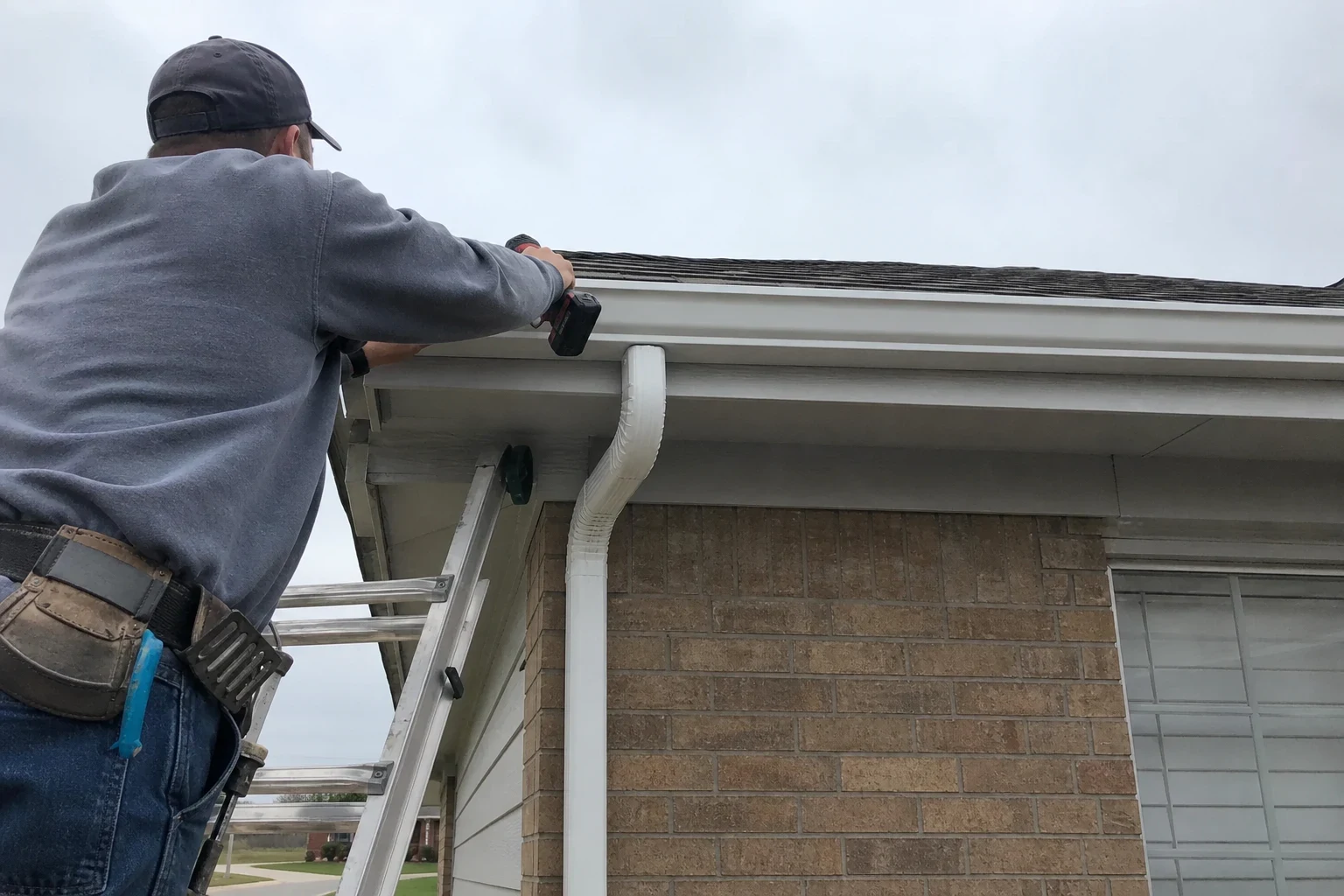
Gutters protect more than the roof edge
A gutter system exists to gather the rain coming off your roof and deliver it somewhere it does no harm. When it is too small, sagging or tilted the wrong direction, the water runs behind the gutter, soaks the fascia and drops straight beside your foundation.
We treat gutters as part of the roof rather than an afterthought. Before replacement comes up, we look at the drip edge, the fascia boards and the downspout outlets. Sometimes the fix is modest: tightening or adding hangers and sealing a leaky corner. Other times the wood behind the gutter has gone soft and needs attention first, and we share photos so you can see the reason for yourself.
What comes with a new gutter system
Seamless runs cut to length
A roll-forming machine shapes each gutter at your home to match its stretch of eave, so joints sit only at corners and outlets. Fewer seams leave fewer places for a drip to begin.
Capacity matched to the roof
Big or steeply pitched roof planes shed water fast. We size the trough and downspouts to the area draining into each run, and we often recommend a larger downspout where a long slope empties into one corner.
Steady fall and concealed hangers
Each run is set with a consistent slope toward its outlet so water keeps moving. Concealed hangers are fastened into the fascia at tight intervals, which holds the line true under heavy rain and winter ice.
A look at the fascia and drip edge
Before anything new goes up, we check the wood behind the old gutter. Soft or rotted fascia is shown to you and repaired, because a gutter screwed into failing boards will sag and pull loose over time.
Downspout placement and discharge
We place downspouts so the runoff lands well clear of the slab. Extensions or splash blocks are added where water would otherwise pool along the foundation.
Repairs and fresh sealant
Dripping corners, loose end caps and sagging lengths can often be put right without a full replacement. When your gutters are still sound, we tell you that.
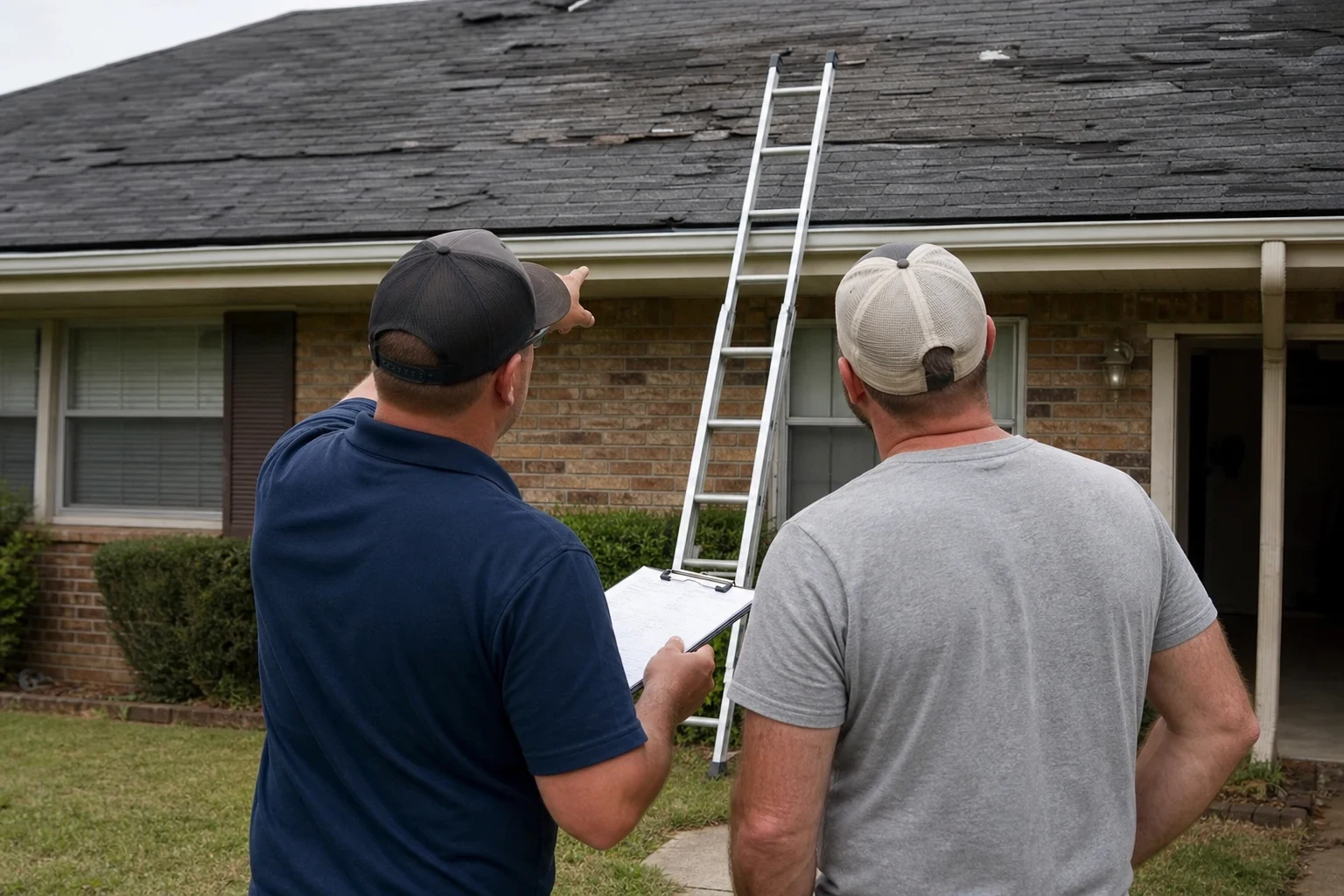
Signs your gutters need attention
- Water spilling over the front
- During a hard rain, water sheeting over the lip usually means the gutter is too small, clogged or pitched away from the downspout.
- Stains or peeling paint on the fascia
- Dark streaks and flaking paint behind the gutter point to water running back toward the house. Left alone, it softens the wood.
- Sagging or pulling away
- A gutter that dips between hangers, or has separated from the roof edge, is no longer draining where it should.
- Puddles or erosion near the foundation
- Washed-out mulch, a trench under the eaves or standing water by the slab means the discharge is landing too close. Central Oklahoma's clay soil swells when it stays wet, so this is worth fixing.
- Drips at seams and corners
- Older sectional gutters often leak at every joint once the sealant ages.
From first visit to final cleanup
- 1
Walking the perimeter
We go around your home checking gutters, fascia, drip edge and downspout outlets, and we note where water overflows or puddles. You see our findings and photos before we recommend anything.
- 2
A clear written estimate
We tell you whether repair or replacement fits your situation and itemize the work, fascia repair included, so no new charges surface later.
- 3
Removal and prep
On install day we take down the old gutters, cover plantings and walkways underneath, and repair any damaged boards before the new system goes up.
- 4
Forming and hanging
Continuous runs are formed on site, set on hidden hangers at an even pitch and sealed at the corners and outlets. Downspouts and extensions are added last.
- 5
Water test and cleanup
We flush water through every section to confirm it drains properly, then haul off the old gutters, loose fasteners and scrap.
What shapes the cost of gutter work
No two rooflines drain the same way, and some of the cost depends on the condition of the wood the old gutters hide. We study the roof edge before pricing anything, then give you a written estimate that explains each line in plain language.
- Linear feet, corners and outlets
- The combined length of your runs drives most of the price. After that come the corners, end caps and downspout outlets the roofline calls for. A single-story home with a few long, unbroken eaves costs less than one with many short roof sections meeting at angles.
- Trough width and downspout size
- A wider gutter profile or an oversized downspout uses more aluminum. Broad or steep roof planes often justify the upgrade, and we explain the reasoning whenever we suggest it.
- Condition of the fascia
- Soft or rotted fascia is replaced before a new gutter is fastened to it. Rot often stays hidden until the old trough comes down. When we uncover it, we pause the job, walk you through the photos and agree on the repair with you before work continues.
- Height and access
- Second-story eaves, sloping lots and tight side yards call for more ladder work and add time to the day.
- Add-ons you can choose
- Gutter guards, tie-ins to underground drain lines and longer extensions increase the total. You do not need any of them, and we say so when one is unlikely to pay off at your home.
Questions homeowners ask about gutters
- Should new gutters go on with a new roof?
- Often that is the sensible order. The old gutters usually have to come off during tear-off anyway, which gives us a clear view of the fascia. If your existing gutters are seamless, sized correctly and still solid, we can rehang or keep them. The roof replacement page covers how the two jobs fit together.
- Can my current gutters be fixed rather than replaced?
- Frequently, yes. A loose hanger, a leaking corner or one dented length is a routine repair. Replacement is the better choice when the system is undersized for the roof, corroded through, or dripping at seam after seam.
- Do gutter guards make sense for my home?
- Beneath mature trees, guards keep leaves and seed pods from packing the trough. The system still benefits from an occasional check. Where there is little canopy overhead, guards may not earn back their cost, and we will be straightforward about that.
- How can I tell if hail hit my gutters?
- Look for dents along the front lip and on the downspouts after a storm. That damage usually matches marks on the shingles, so we check both during one visit. If a claim is likely, the storm damage repair page explains how we record and photograph what we find.
- How much of the day will the install take?
- A typical house is finished within a single working day, from taking down the old gutters to sweeping up afterward. Rotted fascia or a roof with several levels can push the work longer, and any added time is noted in your estimate.
Find out what your gutters actually need
We start with a careful look at your roof edge and drainage, then give you plain findings and a written estimate. Serving Midwest City, Del City, Choctaw and nearby.