Can You Negotiate Roof Pricing in Midwest City?
There is room to shape what a roof costs, as long as you know which lines on the estimate are choices and which ones keep water out of your home.
Can you negotiate roof pricing?
Yes, to a point. You can shape a roof price through material choices, timing and scope, and by asking for a line-item estimate you can question. What should not be bargained away is the work that keeps water out: underlayment, flashing, ventilation and sound decking. A careful inspection shows which is which.
Which parts of a roof price can actually move?
Most of the flexibility in a roof estimate sits in the choices you make, not in a contractor's willingness to knock off a round number. Change the inputs and the total changes honestly, without anyone trimming the work you cannot see.
These are the levers we walk homeowners through most often:
- Shingle line: a standard architectural shingle and an impact-rated shingle are priced differently, and the right choice depends on how long you plan to stay in your home.
- Scope: a sound roof with one failed area may need roof repair, not a full tear-off.
- Timing: work booked outside the busy weeks after a spring hail storm is often easier to schedule on your terms.
- Extras: gutters, ridge vent upgrades or skylight replacement can be done now, later, or not at all.
What should never be negotiated away?
Some items look like line-item padding until you see a roof that went without them. Underlayment, drip edge, step flashing where the roof meets a wall, and properly sealed pipe boots are where most leaks begin when they are skipped or reused. Ventilation matters too. An attic that cannot breathe cooks shingles from below through an Oklahoma summer and shortens their life well before the wind and hail do.
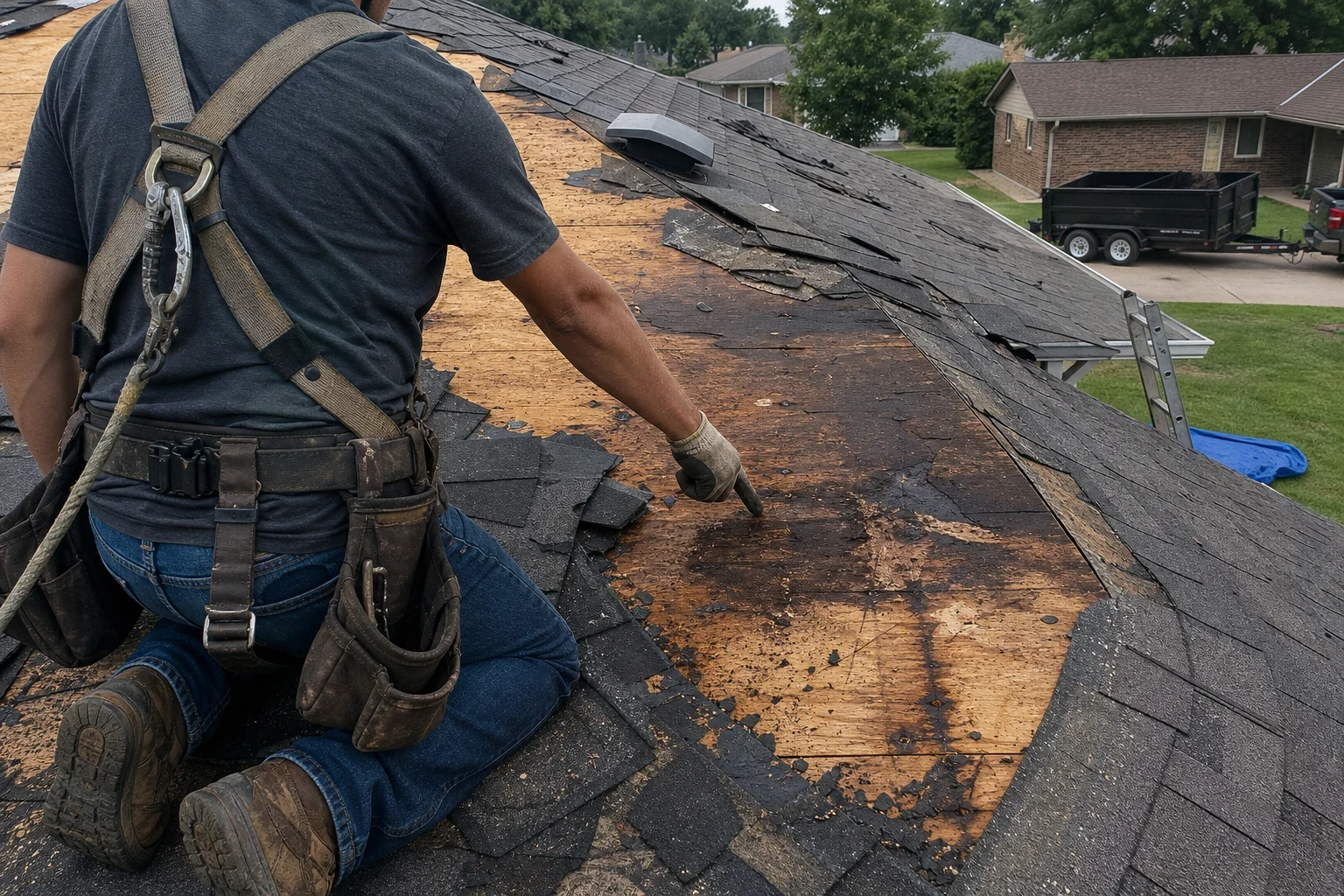
Decking is the other one. Nobody can fully judge the plywood until the old shingles come off, so a good estimate states how soft or rotted sheets will be handled and priced. If one bid leaves that out entirely, it is not cheaper. It just has not told you yet.
The permit belongs on this list as well. It is a small part of the job, and it means the work is on record with the city.
How do you compare two roof estimates fairly?
Put them side by side and check that they describe the same roof. Two bids that differ a great deal usually differ in scope, not in honesty. One may include a full tear-off to the deck while the other quietly plans to lay new shingles over old ones.
Ask each contractor to show you, in writing, the items below. When the lines match, the comparison becomes simple and any real difference in price is easy to see.
- Number of layers being removed and how disposal is handled
- Brand and line of shingle, underlayment and starter strip
- How flashing at chimneys, walls and valleys will be treated
- How damaged decking is found, documented and charged
- Ventilation plan for the attic
- Who pulls the permit and how cleanup is done at the end
Does insurance change the conversation about price?
It does. On a storm claim, the insurer's adjuster writes the scope and the payment is based on that scope, so the price is less a matter of haggling and more a matter of making sure nothing was missed. If the adjuster overlooked damaged vents or flashing, a contractor can document it with photos so you can raise it with your insurer.
Your deductible is yours to pay. A roofer who offers to absorb or waive it is asking you to take part in something your policy does not allow, and it is worth treating as a warning sign. We explain how the claim process works and what we found on your roof, but the adjuster makes the coverage decisions. Our storm damage repair page covers that process in more detail.
Why should the inspection come before any talk of price?
A price without a careful look at the roof is a guess, and guesses tend to run high to cover the unknown or low to win the job. We start by walking the roof and the attic, photographing what we find, and telling you plainly whether a repair will serve you or a replacement is the better use of your money.
Once you have those findings in hand, the price conversation gets calmer. You can see why each line exists, ask about alternatives, and decide what fits your home and your budget. A roof inspection is often the most useful step before you compare anyone's numbers.
More questions about roof pricing
Is the lowest bid ever the right one?
Sometimes, when it covers the same scope and materials as the others. The trouble starts when a low number comes from leaving out decking, flashing or the permit.
Can I buy my own shingles to save money?
It is worth asking, but many roofers prefer to supply materials so they can stand behind the whole system. Ask how a homeowner-supplied product affects the workmanship side of the job.
Will a roofer lower the price if I pay in cash?
The cost of tear-off, materials and labor is the same however you pay. A better use of the conversation is reviewing scope and material options line by line.
Can I split the work into phases to spread out the cost?
Often, yes, for extras like gutters or a skylight. The roof surface itself is best done in one pass, so the new underlayment and shingles tie together cleanly at the ridges and valleys.
See the findings before you talk numbers
A call puts a careful inspection on the calendar. We photograph what we find, explain it plainly, and go over a line-item estimate with you so you can decide what your home actually needs.